
When Homo sapiens began observing the world around them and trying to understand how it worked, they started learning things that could help them survive and live together. But one person’s knowledge could help the whole community only when it was shared with other people. They needed a way to tell one another what they had seen, what they had learned and what others needed to remember. This need slowly led human groups to develop early forms of language, which evolved and became more diverse over time, eventually giving rise to different languages and dialects. Through language, people could share warnings, instructions, experiences and discoveries with one another, which helped their communities survive.
However, spoken words had one major limitation. Once they were spoken, they disappeared unless someone or a community listened to them carefully and preserved them in their memory. If a person knew something important but could not pass it on, that knowledge could disappear with him. Because of this, human beings started looking for a way to preserve their thoughts and experiences. They began using drawings and simple marks. An outline of an animal, for example, could represent the animal they had seen or hunted. These drawings were simple in the beginning, but over time they became more organised and developed into symbols.
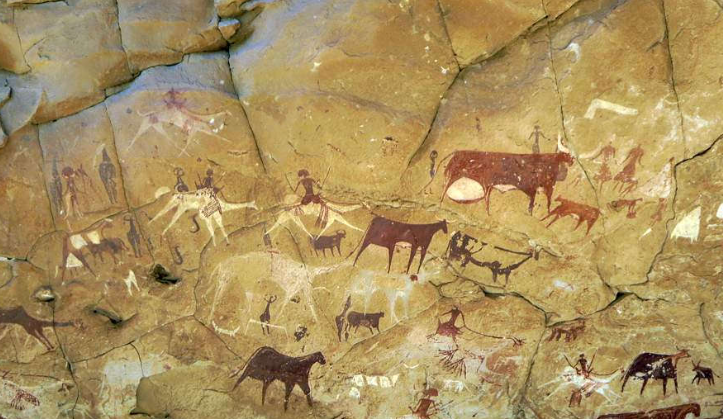
As these symbols became more organised, some came to represent objects or ideas, while others began to represent sounds. Some symbols represented objects or ideas, while others began to represent sounds. When symbols representing sounds were combined, they could represent words or parts of words, and those words carried meaning. Over time, these systems became more complex and developed into different forms of writing. Egyptian hieroglyphs, for example, were used to write the Egyptian language and included symbols that represented objects, ideas and sounds. In other ancient writing systems, symbols were mainly used to represent sounds.
As writing continued to evolve, some civilisations developed alphabets or other writing systems made up of letters, aksharas or other characters. In Sanskrit, Akshara means “that which cannot be destroyed,” and if you think about it, that is exactly what people were trying to create: a way to preserve their words and thoughts so they would not disappear. This development did not happen in exactly the same way everywhere. Different civilisations created and developed their writing systems according to their languages and needs.
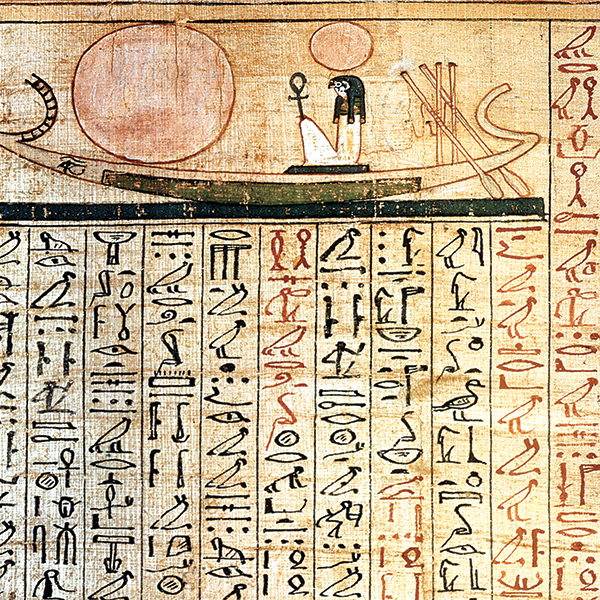
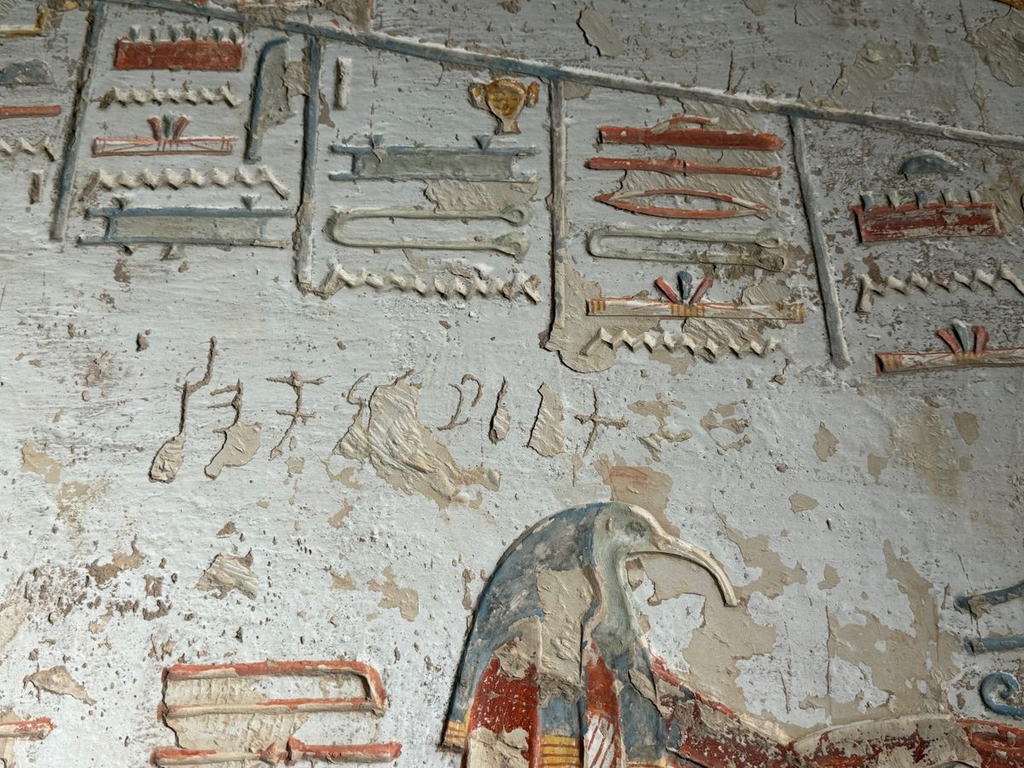
We even have evidence of an ancient Indian traveller, possibly a merchant, who visited Egypt and left inscriptions inside tombs there. It sounds like a simple act, but it shows why writing became so important. His presence was recorded in a way that could still be seen centuries later. It sounds like a simple act, but it shows why writing became so important. People wanted their knowledge, experiences and memories to remain even after they were gone. From simple picture symbols to complex writing systems, humanity has done so much to preserve knowledge and express what is in the mind.
From Stone to Paper
Once human beings had developed writing, another problem appeared. What should they write on, and how could they keep it safe for the future? In ancient times, access to knowledge was still limited, and books did not exist in the form we know them today. Much of what people knew had to survive through memory, speech, teaching and practice. People who had access to knowledgeable teachers, scholars or written records could gain deeper knowledge, while many others remained unaware because they had no easy way to reach it.
Some of the earliest writing was created for practical reasons. People needed to record grain, animals, trade, taxes, property and other important details. Later, writing became a way to preserve laws, religious ideas, stories, poems, medical knowledge and scientific observations. A person who had spent his life learning or discovering something also understood that his work could disappear after his death if he did not record it. A person who had spent his life learning or discovering something also understood that his work could disappear after his death if he did not record it. People naturally wanted their experiences, knowledge and discoveries to survive hundreds of years, so human beings continued searching for materials on which they could write.
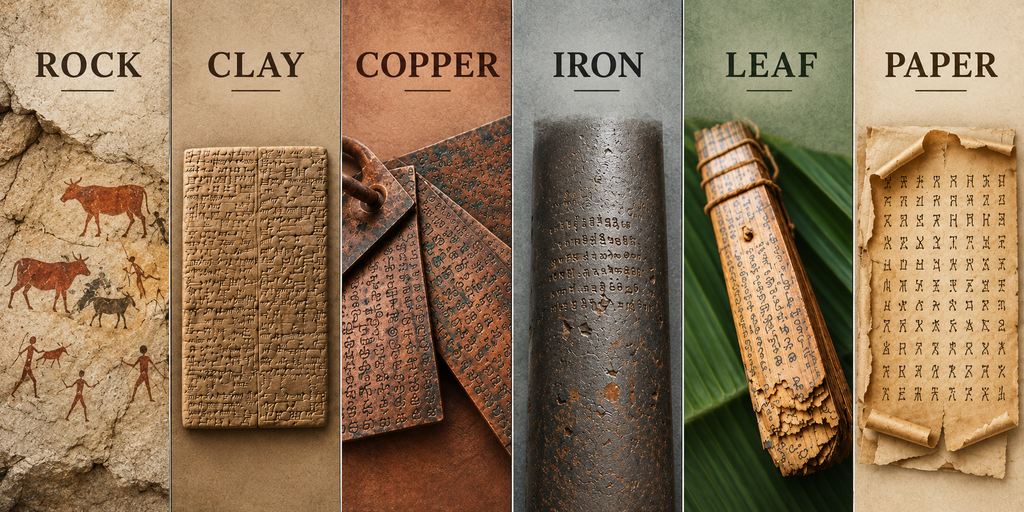
When we think about ancient writing, we often imagine people carving words into stone. Stone was certainly an important writing surface, but some of the earliest writing we know was pressed into wet clay. People also wrote on copper, iron, wood, leaves, cloth, papyrus and parchment. They used whatever material was available to them and suitable for the kind of record they wanted to create. Stone could survive for thousands of years but was difficult to carry. Clay was easier to shape but could break, while leaves and cloth were lighter but could decay.
Paper eventually became one of the most useful writing materials. It had already been developed in China long before it became common in other parts of the world, and it slowly spread through trade and travel. Paper was lighter and easier to carry than stone or clay, and with proper care it could preserve writing for a long time. People could also write many pages on it. Once paper became available on a larger scale, it became easier to store large amounts of information in manuscripts and organise many pages into books.
Books made knowledge easier to preserve and pass to the next generation, but they did not immediately make knowledge available to everyone. Books were expensive, and most people could not read them. For a long time, knowledge still travelled through teachers, scholars, religious institutions, families and oral traditions.
Even after paper and books became available, another problem remained. Every copy had to be written by hand. People used a feather from a bird as a quill, dipped it into ink and carefully formed every letter. In many places, trained scribes spent their entire lives copying religious texts, laws, stories and other important works.
The quality of ink and writing materials continued to improve, and better writing tools slowly made the work easier. However, they did not remove the hardest part of writing. A person still had to form every letter carefully by hand, and mistakes could be difficult to correct.
Even with better paper, ink and pens, creating one manuscript could take weeks or months. After all that work, there was still only one copy. Human beings had found better materials for writing, but they still had not found a fast way to create many copies. That was the problem the printing press would solve.
The Printing Press and the Typewriter
Then came the printing press, and it changed everything. Printing methods had already existed in Asia before Gutenberg, but the movable type press developed in Europe during the fifteenth century made it possible to reproduce books on a much larger scale.
Instead of writing the same book again and again, printers could arrange individual letters, apply ink and press them onto paper many times. The first printed page could still contain a mistake, and that mistake could be repeated in every copy. But once the text was arranged correctly, the same message could be reproduced much more consistently than a handwritten manuscript.
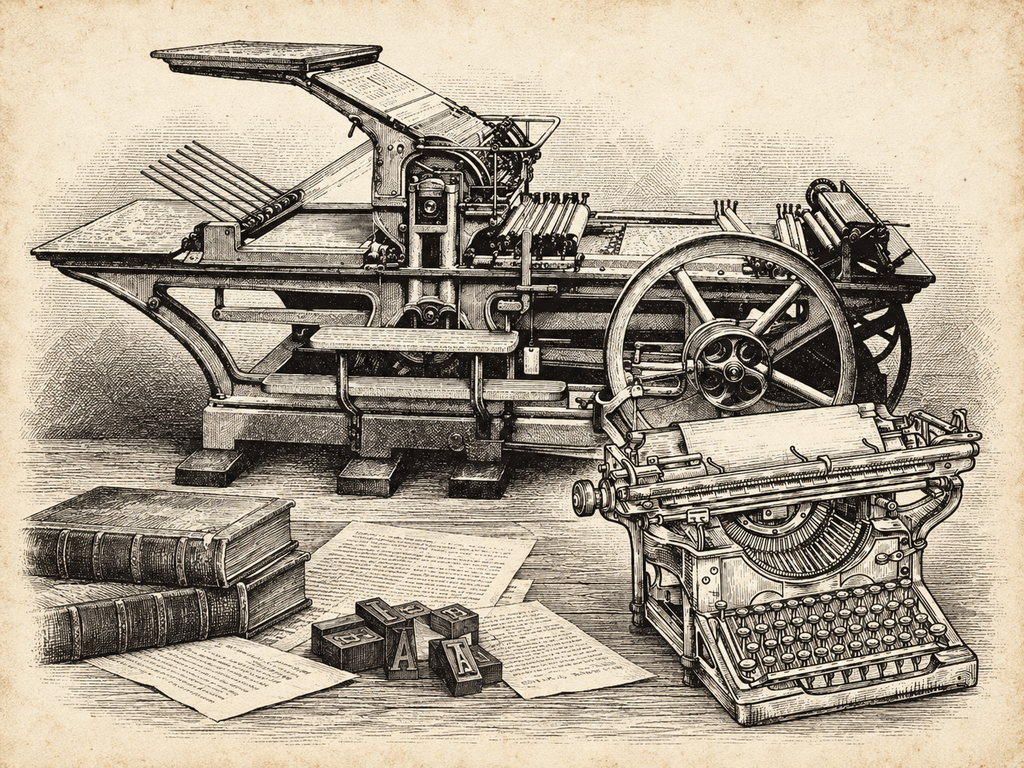
This changed the speed at which knowledge could travel. A book that once took weeks or months to copy could now reach hundreds or thousands of people. Education, science, religion, politics and literature were all affected because information no longer depended completely on one person’s handwriting or the amount of time available to copy it. Printing made knowledge easier to reproduce, distribute and preserve. It also made it possible for mistakes, rumours and false information to travel faster, because a printed message could reach many people at once.
After the printing press, writing tools continued to improve. Pencils became useful, fountain pens became more reliable and ballpoint pens made everyday writing cheap and convenient. A ballpoint pen did not need an inkpot, could be carried easily and was simple enough for almost anyone to use.
The typewriter then brought the idea of printing and writing together in one machine. The idea of a machine that could produce letters had existed earlier, but inventors eventually developed a practical machine that could be used in offices, newspapers and homes. A person no longer had to draw every letter by hand. They only had to press a dedicated key, and the machine would strike an inked ribbon and place that letter on paper.
Writing became faster, cleaner and more uniform. However, the typewriter still had limitations. If a person made a mistake, correcting it was difficult. The page was physical, the words were fixed on it and the writer had to be careful before pressing each key. Handwriting also remained popular because it carried something personal that a machine could not provide.
From the Typewriter to the Computer
The computer changed this process again. For the first time, people could write without using paper, ink or a physical typewriter. They could create a sentence, delete it, move it, copy it or correct it with just a few keystrokes or clicks. A mistake no longer meant throwing away the page and starting again.
A typewritten page was mostly final once it was written, but a computer document could keep changing until the writer was satisfied. People could store thousands of pages on one device, search through them quickly and make as many copies as they wanted. Words could also exist alongside photographs, graphics, videos and other digital content.
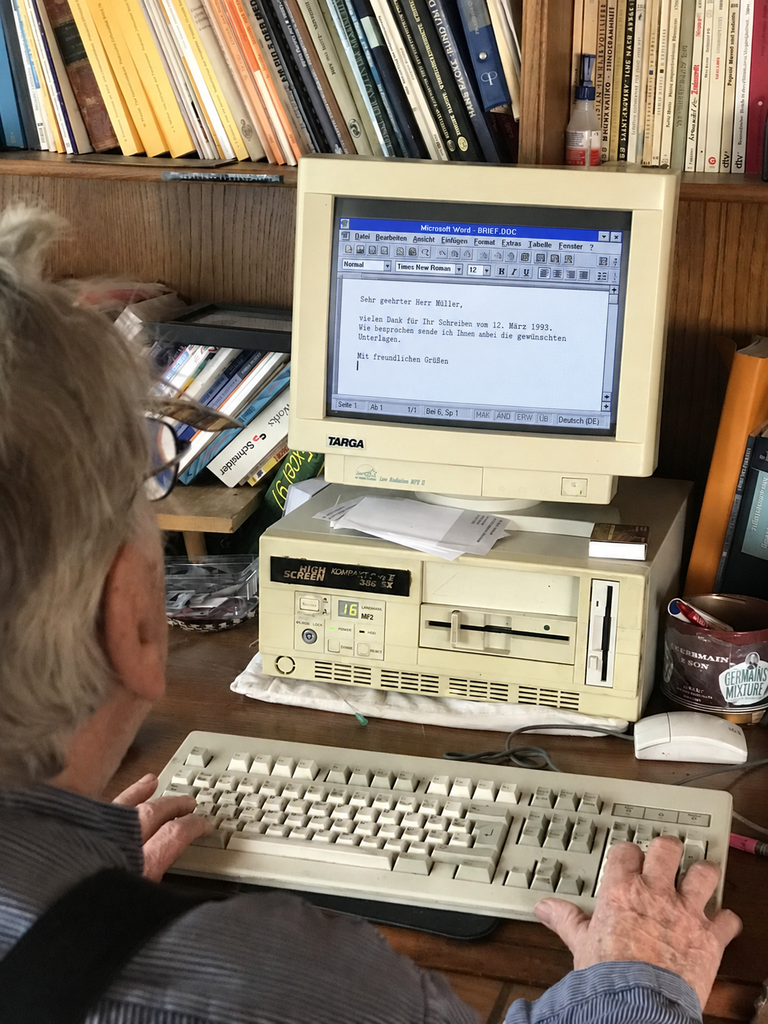
The internet took this one step further. Our words could travel across the world within seconds, carrying photographs and graphics with them. People could send documents instantly, work together from different places and store their information online. Writing was no longer limited to the paper in front of us or the people living near us.
This also changed our daily habits. People now communicate more than ever, but many of us physically write less than earlier generations did. Our work, studies and conversations happen on computers and phones, so typing has become more important than handwriting. We may no longer practise cursive writing as often as people once did. Instead, we focus on typing correctly, quickly and clearly.
The computer eventually made the typewriter almost unnecessary because correcting a mistake or changing a sentence became much easier. It changed writing from something that was mostly permanent into something that could be edited again and again.
From Typing to Speaking
After computers made writing editable, the next question was whether we would always need to type every word ourselves. AI-assisted voice typing is now taking this part of writing even further.
Recently, my boss told me about an AI tool that allows a person to speak instead of typing. If you use such a tool, you do not need to carve your message into stone, scratch it onto a leaf, dip a feather into ink, refill your fountain pen or press every key on a typewriter or keyboard. All you have to do is speak.
The tool can understand what you are trying to say, correct the grammar and articulate the message more clearly. It is not only recording your voice. It is also helping turn rough speech into proper writing, almost like taking the thought in your mind and giving it a better form. Sometimes we know exactly what we want to say, but the words do not come out properly. An AI tool can help arrange those words.
Of course, it can still misunderstand us, so we have to read what it produces and make sure it says what we actually meant. The tool can help with the writing, but the thought and responsibility still belong to the person using it.
When I think about this change, it feels amazing. In the past, writing even a single line on stone could take a long time because every word had to be carved by hand. Today, the same thought can be spoken in a few seconds, converted into text instantly, and even improved by a machine. We have come from using a chisel to slowly preserve one sentence to simply speaking our thoughts and letting technology write them for us.
This became possible because of the work of countless scientists, engineers and other people who contributed to every technology that came before it. Symbols, letters, paper, ink and printing techniques changed how we recorded information. Typewriters made mechanical writing practical, and computers and software later turned writing into digital information. Today’s AI writing tools are another step in that long development. Every invention carried something from earlier inventions and added something new to it.
What Comes Next?
If you notice, we have almost come full circle. Our ancient ancestors developed spoken languages to communicate with one another, but spoken words had one major limitation: once they were spoken, they could disappear. Much later, humans developed writing systems that allowed those words, thoughts and ideas to be preserved. Now, thousands of years later, those same spoken words can be captured by the microphone in your phone or computer, and AI can transcribe and articulate them better into written words in real time. The original voice can also be recorded. If you imagine these two moments side by side, it is actually wild to think about how far we have come.
I do not think we are going to stop here. The next step could be devices that allow us to communicate through thought. We may eventually connect the brain directly with computers and use our thoughts to control machines or produce words.
Brain-computer interfaces are already being developed to help people who cannot move or speak easily. However, current systems do not read every private thought inside a person’s mind. They detect certain brain signals and learn to connect them with specific commands. Elon Musk’s Neuralink is working on this technology to help people with paralysis control digital devices.

The immediate purpose is to help people, but I think the long-term possibilities could be much wider because this technology has enormous potential. One day, we may be able to think about an idea and have a machine turn that thought into words, images or actions. Direct communication from one mind to another still belongs to the future, but it is interesting to imagine where this development could lead.
At the same time, if technology ever becomes directly connected to our thoughts, questions about privacy and control will become very important. Our thoughts are the most personal things we have, so such technology would need to be used carefully.
I think it won’t even stop there. We have already seen demonstrations where AI bots switch to their own weird sound-based way of communicating for faster information exchange. Humans may also start changing or simplifying their own languages for faster communication once Neuralink-type inventions begin entering the market. This is simply human nature. We always try to make things better than before, faster than before, more efficient and more secure. This nature has really helped us as a human society achieve this much technological advancement.
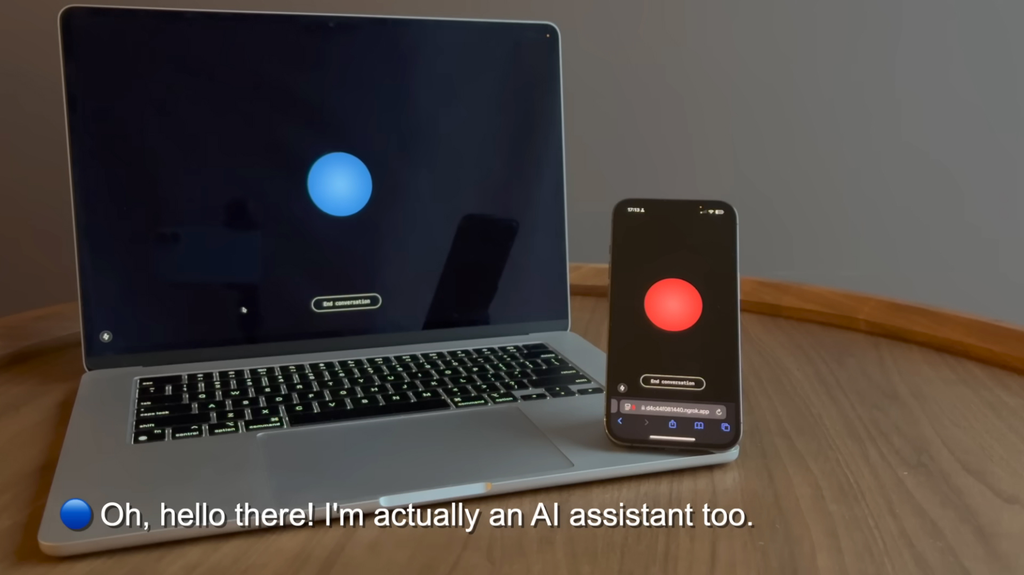
We have seen this happen again and again. The printing press changed how information was shared, the steam engine changed how things moved, computers changed how we worked and communicated, and now it is time for AI. I think technological evolution will happen even faster from here, and things may change so quickly that when we look back at this time in the future, we might think, “What the heck just happened?”
Personally, I have mixed feelings about this progress. I do not like watching something nice and beautiful like handwriting become outdated, but all of this is part of change. In life, if there is one thing that is constant, it is change.
And change happens for a reason. It is one of the things that helps civilisation move forward. If we refuse to adapt because we believe the old way is always better, we can close ourselves off from science and the opportunities that new tools create.
We should accept change and use it in the way that suits us best. We do not have to use every new technology in exactly the same way as everyone else. We can use AI when it saves time, type when speed matters and still write by hand when the act of writing itself feels important.
The tools will continue changing, but our need to express ourselves, preserve our thoughts and share them with other people is as old as the humans who first drew cave paintings. And even as technology changes, I do not think the joy and personal touch of creating something with our own hands can ever truly be found in doing it digitally.