Note: Shraadh (also spelled Sharaad or श्राद्ध — the ritual period to honor ancestors) is different from Sharad (the autumn season). You might have landed here searching “What are the dates for Shradh?” or “Shraadh dates,” or even “Sharaad” or “श्राद्ध.” And if you searched for “Sharad,” lol, you’re still in the right place — I got confused the same way during my initial Google search!
Our Hindu ancestors were among the wisest people to ever walk this planet. The Bharatiya civilization is one of the most ancient, and it understood the world in a way no other culture ever has or perhaps ever will. That is why our traditions teach us to celebrate and respect everything, living and non-living.
But over time, because of corruption, nepotism, weak kings, barbaric invasions, colonial rule, and now the age of the internet and globalization, we have slowly forgotten why our ancestors created these practices in the first place. Today, some of us blindly follow them without understanding their purpose, while others mock or reject them entirely. Both approaches are a disservice to the wisdom of those who came before us.
As a society, we should feel responsible for preserving and sharing the philosophy behind these traditions. In this blog, I will try my best to help you, the reader, understand Sharaad, its meaning, its importance, and why certain practices are observed during this period.
Your Perspective Shapes How You See the World
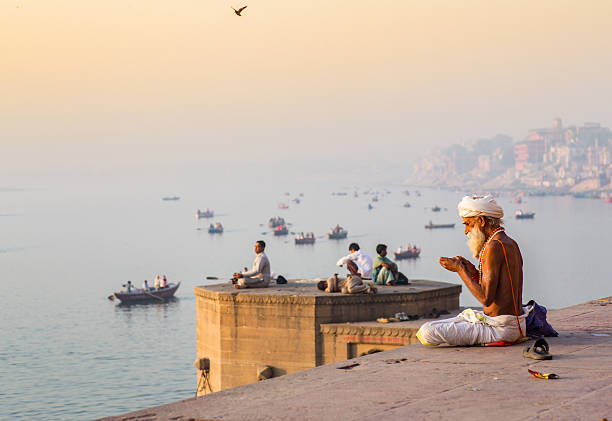
Before I talk about Shraadh, it’s important to reflect on how we see the world. Without this understanding, many may dismiss these traditions as superstition or “mumbo jumbo,” missing the deeper bhava (essence) behind them.
I believe there are three main ways to view life, spiritual, philosophical, and scientific. None of them is entirely right or wrong; in fact, all three can coexist. The problem arises only when one perspective mocks or attacks the others, instead of appreciating their value.
Take the rising sun as an example:
- Spiritual View: The sunrise becomes a sacred moment, a reminder that life is a gift. A spiritual person may fold their hands, offer a prayer, or feel a deep connection with the divine.
- Philosophical View: A philosopher sees it as a metaphor for hope and renewal, proof that even after the darkest night, light returns.
- Scientific View: A scientist understands it as the result of Earth’s rotation and atmospheric scattering, a moment to marvel at nature’s precision.
All three views are beautiful. The spiritual view touches the heart, the philosophical view engages the mind, and the scientific view satisfies curiosity. Together, they create a richer, fuller understanding of reality. Instead of debating which one is “right,” we should embrace the harmony between them, that is where true wisdom lies. Lets now understand a few things about Shraadh.
What is Sharaad and When Does It Happen?
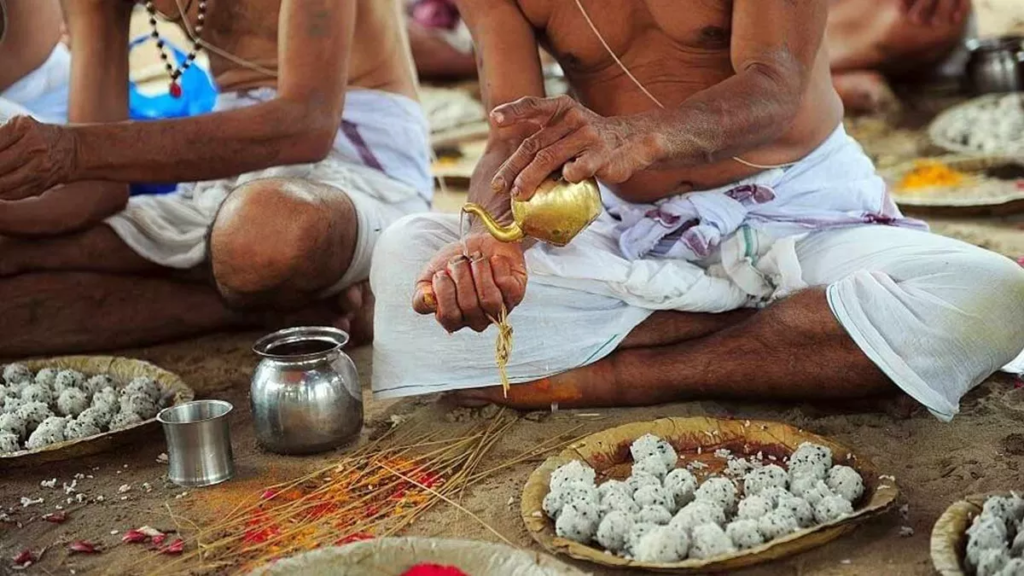
Sharaad is a sacred ritual in Hindu culture, performed to honor and remember our ancestors. The word “Sharaad” comes from Shraddha, meaning faith and devotion, perfectly reflecting the spirit of this practice. It is a way of expressing gratitude to those who came before us, acknowledging the life, values, and opportunities we have inherited from them.
Our civilization deeply respects its forefathers, which is why we often keep their photos in our home temples, alongside the gods. In fact, some of our ancestors became revered as gods themselves because of the lives they led. Lord Ram, for example, is worshipped not merely for heroic deeds, but because he lived as an ideal human, a devoted son, a caring husband, a righteous king, a loyal brother, a true friend, and even a fair enemy, while upholding dharma despite facing challenges in every role.
Sharaad is most commonly observed during a special 15-day period called Pitru Paksha (the Fortnight of Ancestors), which usually falls in September–October. These 15 days follow the lunar cycle and take place during the waning phase of the Moon (Krishna Paksha) in the month of Bhadrapada or Ashwin, depending on the regional calendar. Each day of Pitru Paksha corresponds to a specific lunar day (Tithi), and families perform rituals on the day that matches their ancestor’s death Tithi.
Spiritually, Sharaad is seen as fulfilling our duty to our forefathers (Pitru Rina), one of the three debts mentioned in Hindu philosophy. It is believed that during this time, the souls of our ancestors come closer to the earthly realm to accept offerings such as Pind Daan and Tarpan. Performing Sharaad with sincerity is said to bring peace to their souls, ensure blessings for the family, and remove obstacles from life.
Three Types Debts or Rin

In Hindu thought, there are three ऋण (Rin), three kinds of debts or obligations, described in our scriptures. I first heard about them in B.R. Chopra’s Mahabharat when I was in my early teens (I mostly watched it for the intro song, it used to give me goosebumps). These three Rin are Deva Rin, Rishi Rin, and Pitra Rin.
१ Deva Rina (debt to gods / nature)
Who or what is “God”? Is nature God? Is the universe God? No single answer fits everyone. Hindus have a very broad, inclusive idea of the divine, we find the sacred in a stone, a river, a tree, the sun, or the sky. Whatever power sets the cosmos in motion and sustains life, call it God, the prime mover, or the laws of nature, we owe that force a debt.
Think practically: without the sun there are no plants; without plants there is no food; without rain there is no harvest. These vital forces keep us alive. We cannot fully repay this Rina, but we can show gratitude and protect those forces: bowing to the sun, treating rivers like the Ganga with reverence, and giving certain animals and natural places protected status so they are respected rather than exploited.
२ Rishi Rina (debt to knowledge and teachers)
Knowledge is what lifts humans above mere survival. Our ancient rishis and teachers created, preserved, and passed on the original knowledge, spiritual, scientific, social, that shaped our civilisation. Every century, wise people added to that legacy: writing manuscripts, teaching students, developing practices that improved society. We owe them a debt we cannot completely repay, but we can honour them by learning, teaching, preserving manuscripts and traditions, supporting scholars and schools, and keeping the chain of knowledge, the guru-śiṣya tradition, alive.
३ Pitru Rina (debt to ancestors)
Our ancestors gave us life, language, family ties, land, customs, and a cultural identity. They sacrificed, struggled, built homes and communities, and passed values down through generations. That creates a duty, the Pitra Rin, to remember and respect them.
We cannot fully repay our ancestors, yet we honour this Rin through remembrance and responsibility: caring for elder family members, preserving family stories and traditions, performing acts of charity in their name, keeping moral and social responsibilities, and performing rituals that acknowledge their role in our life.
When we do this sincerely, it is believed to bring blessings, protection, and a sense of continuity, reminding us that we are part of an unbroken chain stretching from the past into the future. By honouring them, we also set an example for the next generation, teaching them to value where they come from and not lose what was handed down.
Purpose of Sharaad: Removing Pitra Rina
Now that we understand what Sharaad is and the concept of the three Rinas, we can see its deeper purpose. Sharadh is not just a ritual, it is a way of removing or balancing the Pitra Rina.
Think of it as an annual act of gratitude, much like visiting your grandparents or celebrating Mother’s Day or Father’s Day, but at a spiritual level. We are saying, “Thank you for giving us life, for everything you built and preserved so we could exist today. May you be at peace, and may your blessings guide us.”
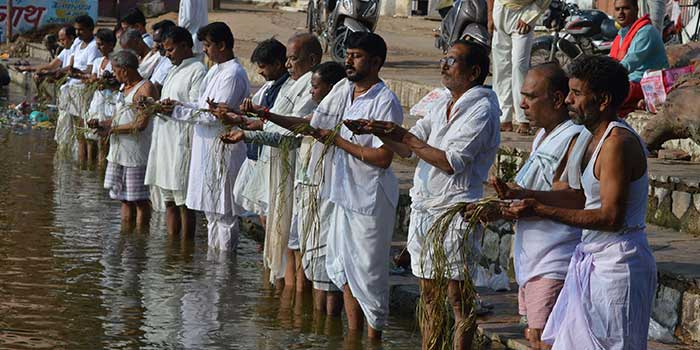
By performing Sharaad with sincerity, offering water (tarpan), food (pinda daan), and prayers, we symbolically nourish our ancestors’ souls. In return, it is believed they bless us with strength, wisdom, and protection from unseen obstacles.
In a more philosophical sense, Sharaad also keeps us grounded. It reminds us that we are part of an unbroken chain, we did not appear out of nowhere. Every generation owes its existence to the previous one. Remembering them helps us stay humble, responsible, and aware that we, too, are ancestors-in-the-making for those who will come after us.
Why We Avoid Starting New Things During This Period
You may have heard people say not to buy a new house, get married, or start a business during Sharaad or Pitru Paksha. Some dismiss this as superstition, but there is a very clear logic behind it.
Sharaad is a period of remembrance, reflection, and prayer. It is a time to look back with gratitude, not forward with celebrations. This fortnight is spiritually solemn, much like how in many cultures mourning periods are kept separate from celebrations. Our ancestors wanted us to spend these 15 days fully focused on honoring those who came before us, not distracted by parties, shopping, or new ventures.
It is not about fear or bad luck. It is about alignment: celebration brings outward joy and expansion, while Sharaad is about going inward, offering gratitude, and letting go. Once Pitru Paksha ends, we step into Navratri, a bright, vibrant festival that is seen as the perfect time to begin new things with fresh energy and the blessings of the Divine Mother.
Think of it this way: if Yom Kippur (a Jewish day of atonement) is a day for repentance and fasting rather than celebration, Sharaad is our version of such a reflective period, a time to show respect, not to throw parties or buy new things.
Reminder from Our Ancestors
In a world that moves fast, generation with short span of attention which forget things fast and change romantic partners like they are changing clothes all thanks to western civilization and often forgets its past, Sharaad is a gentle reminder that we are not isolated beings, we are part of a chain that stretches across time.
Honoring our ancestors is not about rituals alone; it is about gratitude, humility, and staying rooted while we grow. When we remember where we come from, we walk into the future with more clarity, courage, and purpose.